Showing posts with label Barack Obama. Show all posts

Tuesday, March 6, 2012

Super Tuesday Results: More Craziness Ahead!


Well, most results are in and I'm going to call it: There's no clean closure to this Republican Race in sight. 

At this point, that's basically bad news for all Republican nominees involved since the results ensured that no candidate will drop out and this carnival will continue. Here are my thoughts on each of the candidates and what tonight meant for them.

Mitt Romney: Mitt Romney will most likely be crowned tonight's big winner thanks to a win, albeit a close one, in Ohio. No, his campaign isn't really in better shape than it was before. No, he didn't win virtually any counties outside the major metro areas in Ohio. But he won, and that's what matters for delegates and momentum. Romney's real problem is that stubborn elephant in the room that he still isn't winning over those that call themselves "very conservative" or people making less than $100,000 a year in these important swing states. Even more concerning, at least in my opinion, is that he was only able to garner 60% of the vote in Virginia against Ron Paul. 40% of voting Virginians, a state supposed to be friendly to Romney (if pundits are to be believed), wouldn't vote for Romney when the only alternative on the ballot was the "weakest" candidate in the race from a national electability standpoint. Virginia shows that there are still a lot of Not-Romney voters out there, and they're just not willing to come around to him yet. Personally, I think most of them will come around in November if it comes to that. Still though, at the end of the night he has the most delegates and won the most states, all of which were pretty predictable outside of Ohio, and that is what will matter for momentum. He's still the "inevitable" nominee to beat and he will still have the most delegates, the most machine-like campaign, and likely the most money. The overall dynamic of the race really hasn't changed one bit from the Romney perspective, and that's at least "okay" if you're a Romney fan. The crater the Romney campaign has been driving themselves into is that independents and conservative Democrats, must-win candidate groups if he wants to beat President Obama in November, like him less and less as the campaign goes on. Whether the ads come from him or his Super PAC, the negative tone and frequent gaffes have really hurt his image and he's got a lot of work to do if he wants to improve it before November. 

Rick Santorum: Rick Santorum did relatively well tonight too, which means he'll be sticking around a lot longer as well. Tennessee and Oklahoma were significant wins for him, especially since Gingrich was coming from behind and hurting Santorum enough to possibly propel either Romney or Gingrich into the winner's seat in those races. Unfortunately for both of them, Santorum hung on and won those states. Unfortunately for Paul, Santorum also won North Dakota pretty handily. Winning Ohio would have been huge news for Santorum, but as it is he didn't come out of the day too badly. Interestingly, if he had been able to win over the voters who cast ballots for Rick Perry or Jon Huntsman (I really, really, really don't see the point in voting for people not even running anymore, by the way), he could have won Ohio, but those people made their stubborn views known today. His numbers with women are still weak and he still doesn't have a lot of appeal to the more moderate or independent voters, both of which could be major issues if he ended up with the nomination, but I find it unlikely that he can come from behind in the all-or-nothing states and grab the reins away from Romney, who already has a significant delegate lead.

Newt Gingrich: Tonight was a disappointing night for Newt Gingrich, no matter what his campaign may be saying right now. Yes, he won Georgia, his delegate-rich home state and a state he worked very hard in the past few weeks. Yes, he came from behind in the polls in Tennessee and Oklahoma and did considerably better than most would have predicted, but he really needed a couple wins to get some momentum back on his side. The good news for the Gingrich campaign is there are a couple more contests in the next few days he may fare well in, and with a decisive win in Georgia his campaign can continue fighting on. However, and I really don't love saying this, I think his campaign is probably done for in the next several weeks. Gingrich isn't doing that badly in delegates in all honesty, he's only 40ish behind Santorum, but as long as both of them are in the race it will be almost impossible for either of them to grab enough delegates away from the other to stop Romney. Even combined they would trail Romney, but there are some factors that can't be predicted that might have allowed either of them to perform better if the other weren't in the race. At any rate, Santorum's moment in the spotlight appears it is going to continue, and that's bad news for Gingrich. Unless Santorum somehow implodes spectacularly and releases his delegates to Gingrich, a highly unlikely event, Gingrich will need an act of God to get enough momentum back on his side to seize the nomination. I don't necessarily think he should drop out, the voters have delivered enough delegates to both Gingrich and Santorum to let them know that they are liked, but they can't all be liked at the same time and beat Romney. 

Ron Paul: Tonight was a mixed night for Ron Paul too. He performed pretty well against Romney in the two-man Virginia contest, and he came in second in North Dakota and Idaho, all of which will be loudly proclaimed as wins by his exuberant campaign spokesmen who like to keep my inbox flooded with lengthy emails. Despite the fact he didn't win any of them, he just did better than most people were willing to give him credit for, the Paul campaign will still happily jump up on the soapbox that all but his most ardent supporters are growing weary of and claim the establishment is afraid of him and he'd be winning if it were a fair fight. Considering he has received a good bit of air time and debate time this election cycle and he's one of the most consistently financed candidates, I have a hard time believing it's not a fair fight for him, but that's not the point. The point is Virginia, North Dakota, and Idaho all went pretty well for him. More interesting than those states, or the Paul campaign's pattern of rhetoric, at least in my opinion, is that Paul came in second in Vermont. I hadn't heard near as much speculation about his performance in Vermont, so his ability to beat Santorum and Gingrich on the east coast will be a legitimate strength to proclaim for the Paul camp in the weeks to come. Alaska's results aren't all in yet, but it appears he will not do nearly as well as many had predicted there. Not only will he not get the win he was needing, it looks like he won't com in second either, which is disappointing considering he was the only candidate to visit Alaska. This Super Tuesday performance means the point I made last time, and have been making for some time now, still remains: Ron Paul cannot, and will not, win the nomination proceeding like this. Before you send me angry messages or comments about how he'd win in a fair fight (and in the future, please explain to me what a fair fight is, I really don't know what you're talking about there), do the math. Paul hasn't won a single state, despite claiming several times he was about to win one. He just can't appeal to enough voters overall to deliver a win for his campaign, and without some wins, and some big ones, he can't rack up enough delegates to get the nomination. Right now he has less than a sixth of the delegates that Romney has. If Gingrich, Santorum, or both, choose to drop out and release their delegates, you know damn well they're not going to ask them to support Paul. Don't get me wrong, I like Paul. I like some of his ideas and I respect his consistency and conviction, but if you think he can still win the nomination with a shortage of friendly states ahead for him on the calendar and all-or-nothing state contests nearing, you're living in a fantasy world. 

Anyway, I've rambled on long enough for now. The bottom line is that there is still no decisive winner and the Republican voters are still very divided. Super Tuesday took us one big step closer to a brokered convention, and the Obama campaign must be loving the thought of that. 

As always, your thoughts, questions, and rants are welcome.
-M

Tuesday, February 7, 2012

BarackObama can pretend the Super PAC flip is necessary, but I'm not buying it


My newest reblog/response is to ryking on the issue of Super PACs.
Unfortunately the moral high ground for the Obama campaign on Super PACs has been nullified by their decision to support Priorities USA. Politifact has given him a “Full Flop” on this issue. I know his campaign is saying it’s so they won’t fall behind in funding, but for a campaign that was able to raise over $650 million on it’s own before aid kicked in from the DNC and the new laws were in place, I find that very difficult, borderline impossible, to believe. The reality is the Obama campaign will likely be able to out raise their Republican opponent regardless of whether they give their blessing to a Super PAC or not, but like the Republicans the Super PAC will allow some of their key donors to donate huge amounts relatively secretly, and that’s what they want. The reality is the candidates, especially the President, love to claim to hate these Super PACs, but they really love that it can keep their biggest contributors and potential sources of influence secret. 
-M
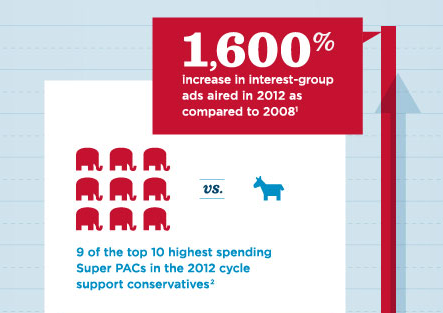
If you’re wondering why this donkey looks so outnumbered: here’s everything you need to know about Republican Super PACs and this year’s election.
(via ryking)
Source: barackobama

Tuesday, January 31, 2012

What did we learn in Florida? Ugly politics work... And they don't.


With the results in and the pundits having a field day making wild claims on TV about what Florida means for the rest of the primary season, it's time to get down to brass tacks. The real question isn't what Florida means for the rest of the primary season, but what did we learn from it? Did Romney finally show he can unite the Republican party and beat President Obama? Is the style we saw in Florida from Gingrich and Romney going to continue? I offer my thoughts:

What did we learn?
We learned that Romney intends to win this process by any means necessary. He didn't just take off the gloves, he put on boxing gloves and wrapped them in barbed wire. He and his Super PACs spent an absolute fortune, pundits are saying he outspent Gingrich by $15 million in Florida (that means he spent a minimum of 4x more in Florida than Newt), and they spent almost 100% of it on purely negative ads trashing Gingrich. The attack ads (some of which were immediately disproved by Politifact and other sources, but people don't normally look into things that well) aren't a new tactic, we saw how well Romney's negative tactics worked in Iowa when he demolished Gingrich there. What was a new development was how personal he got on the campaign trail. We didn't see the Romney that promotes his business and leadership experience in Florida, we saw a new Romney that focused his energy on lashing out against Gingrich and pointing out his past in Congress and as a consultant and using that as a platform to make attacks against him. I wondered if Romney would go for the throat after being put on notice in South Carolina, but I underestimated how far he was willing to go with it. We also saw a different side of Gingrich than we've seen to date. The skilled orator who highlights his past as a political strategist and conservative while promoting his "grandiose" ideas was missing in Florida. We saw a Gingrich that appeared uncomfortable while under constant attack and failed to defend himself in an effective way against the attacks, whether they were true or false. He appeared frustrated, defensive, and angry and lost his focus on the issues and passion for his ideas we've seen so far. The other candidates, Santorum and Paul, barely register as having done anything in Florida. And before you start yelling at me, yes, I know both of them appeared at some events across the state and participated in the debates. Paul wisely skipped Florida to avoid wasting money and Santorum did what he could with the shoestring budget his campaign has been reduced to. We already knew Ron Paul was in this for the long haul, but it now appears Santorum is going to stay in the race as long as he can despite being flat in the polls too. I still don't think this can continue all the way to the convention despite his claim that it will- Santorum simply doesn't have the money or the loyal base of Paul to make it that far. He will have to win another state if he wants to build any momentum back up, and although that's possible, I don't think it's too probable. 

Did Romney show us he can unite the Republican Party and beat President Obama?
In a word- No. Romney had his strongest performance to date which is certainly important, but he still has a long ways to go to prove he can unite the Republican base and still appeal to any independents in a general election. Florida was a mixed bag for him. Yes, he won the primary and the delegates, but at a great cost. Not only did his campaign spend more than quadruple the amount of money campaigning in Florida than Gingrich (Santorum and Paul won't register on the spending scale compared to either in Florida), he also lost a lot of his appeal to independents and potential Democratic defectors with the way he spent the money. Polls now show Romney's likability numbers have been dropping since his scorched earth attack ad strategy started, and most surprisingly polls now show that Floridians would rather vote for Obama than Romney. This puts a whole new kink in the whole process. It has been assumed up until now that Romney was the most electable candidate and polls to date had shown him as the most likely to beat Obama, but that image of inevitability could be shattered if the way he wins the Republican nomination makes him so unlikable he can't beat Obama. Romney is going to have to find a new way to beat Gingrich if he wants to be the nominee, because his constant negative attacks are taking a toll on his electability and overall appeal. Jabs here and there are fine and are pretty effective, but his current plan is a two edged sword and it will end up cutting him as badly as it cuts his opponents if he isn't careful.

Is the style we saw in Florida from Gingrich and Romney going to continue?
No, I don't think so. Gingrich's concession speech (well, there wasn't really any concession going on in it but I'm not sure what else you'd call it) after the results were almost all in was probably a signal of how his campaign will be run from here on out. He knows he didn't handle the attacks well in Florida and that his own counter attacks failed to do any real damage to Romney and he needs to adjust his strategy if he's going to be the nominee come August. I think Gingrich will stick to what he does best: promote big ideas, rail against Obama and the media when it's beneficial to him, and lay out his vision for "rebuilding" America. He'll have to get some jabs in against Romney here and there, but he needs to appear to rise above the attacks to beat them and I think he now knows that. Romney's campaign machine is too big and well funded not to know that although they won the delegates in Florida, their current direction could cost them the election in November even if it succeeds in getting them the nomination. I think you'll see Romney focus more on railing against Obama and trying to paint himself as someone the "common man" can connect with, because right now he's still not making them believe he is the one that can make the economy work for them again. I think too many of his Gingrich attacks have been called out in Florida and Newt will theoretically be wiser from the mess of Florida and be better prepared for future grilling by the Romney ad machine, so there's no logic in continuing in the vein of relentless negativity. The Super PACs for both will probably keep the anger dialed up for the rest of the process though, and the candidates will of course claim there's nothing they can do about that.
So, like I said after South Carolina: Things are getting fun, and it will be interesting to see where things head. Luckily for my study habits February is a pretty slow month for the campaigning, but let me know what you think and I'll do my best to respond.

-M

Thursday, January 26, 2012

Who's Really Not Paying Their "Fair Share"?


If I had to pick one thing that has been annoying me most about our President's speeches recently, it would have to be his use of classist rhetoric to blame our government's economic failings on the wealthy in our country. Last night's State of the Union, to no one's surprise, included his tagline complaint that some aren't "paying their fair share". Although on the surface it should be obvious that there is no logical reason to believe this anti-rich rhetoric, it hasn't stopped a lot of people from doing exactly that, so I decided to look into it a little more depth. In all reality, all of President Obama's anti-"rich" tax speech can be boiled down to two questions.
1- Who are the "rich" in our society? and 2- Do they pay their "fair share"?
1- The first question has had a few different answers over the past few years, but the only answer that matters right now is what the president thinks "rich" means. President Obama has been calling for a tax increase on all families making over $250,000 a year and an even more significant increase on people earning over $1,000,000 a year. The president has said this would leave taxes the same for 99% of families. Unfortunately, that's just false. $250,000 a year may sound like a lot to you or me, but it doesn't put you in the top 1% of taxpayers. It takes an annual income of $380,354 to be one of top top 1% (or $343,927 depending on the recent year of IRS stats you use). It used to be quite a bit higher before the recession hit hard, in 2007 it was $424,413, but it has been on the decline while the economy suffers. So here's my first big issue with the President's rhetoric: It's founded on one blatant lie and one implied one. The first is that it will only affect the top 1% of taxpayers, which as you can see is just not true. Are these people still in the highest brackets of income? Yes, but the impact of the tax increases will not be not near as isolated as the President tries to make it sound. The second, more subtle, lie is that the "rich" have not been affected by the tough times our country is going through and therefore can afford to pay more taxes while the rest of us are suffering. That's also clearly false, as is evidenced by the drastic decline in the amount of earnings it takes to be in the top 1%. There's also the underlying concern I have with saying that anyone that makes more than $250,000 a year is rich. You and I all know people, probably a lot of them, that make more than that and most of them don't qualify as rich in my book. They don't own private planes, drive Lamborghinis, or have a vacation house on the beach. Depending on where you live, $250,000 a year might not even cover a nicer than average house. The $250,000+ a year is a category that a lot of your friends may fall into. Many small business owners, attorneys, physicians, realtors, and other professionals may be in this income category. These people make a good living, but they're not isolated from the effects of a bad economy and they still have to go to work to make ends meet. They're not sitting around counting their money or living purely off investments, they put years into building their businesses and practices to make a good living and presumably work hard for their money. More importantly is that these are the people that hire the rest of us. They invest in their businesses and by doing so allow many of us to earn a paycheck. If we increase their taxes, do you honestly believe that is going to help create more jobs? Even if we only increased the taxes on the "wealthy" that make millions a year and are job creators on a much larger scale, the logic still stands: Business owners don't hire more people when you take more of their money away each year. Since many people agree that the most important part of getting our economy back on track is getting people back to work, why are we suddenly attacking these people as not paying their fair share?
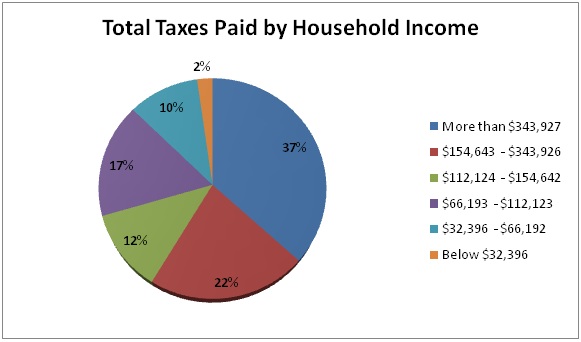
2- Is it because there is some truth to the President's claim that they aren't paying their fair share? He has been quite willing to have Warren Buffett, one the wealthiest men in the world, use the media as a way to promote the "rich should pay more" message and build resentment against the "rich" that disagree with his view. If Mr. Buffett thinks the rich should pay more taxes those that say they already pay their fair share are just being greedy, right? Surely one of the wealthiest men in the U.S. wouldn't be offering to pay more taxes if there wasn't some system in place favoring the "rich" Obama is rallying against, correct? Wrong. Warren Buffett is the third richest man in the world with a net worth of $50 billion dollars. In 2010, he made nearly $63 million in income. He has said in the past his effective tax rate is around 19% and that he should pay more taxes. His lower tax rate, much like Mitt Romney's, is because his income doesn't come from a paycheck each year like most Americans, or even most of those earnign over $250,000 a year, but from investments. This is the first critical point that people need to understand- increasing income taxes won't affect Warren Buffett, Bill Gates, or even Mitt Romney much at all, it will just hurt those that rely on paychecks to make a living. So why is President Obama using Warren Buffett to justify increases in income taxes? Well... I don't know of any reason that doesn't assume we're idiots or have purely political motives. But even if the tax increases were going to affect him, Warren Buffett has as little in common with someone earning $250,000 a year as a person earning $250,000 a year does with a homeless person. His annual income is 252 times that of what President Obama is classifying as rich. To put that in context, the family earning $250,000 a year makes five times the average household income of $50,221. Who do you think they feel closest to on the income scale- Mr. Buffett or the average family? To answer this "are they paying their fair share" question though we need to use some real numbers, not fight rhetoric with rhetoric, so here goes... In 2009, the top 50% of Americans, those earning over $32,396 a year paid 97.75% of ALL taxes. The top 10%, (>$112,124) paid 70.47% of all taxes. The top 5% (>$154,643) paid 58.66% of all taxes, and the top 1% (>$343,927) paid 36.73% of ALL taxes. So if you earned between $32,396 and $112,124, you make up 40% of Americans that pay 27% of all taxes. If you made less, you make up 50% of all Americans that pay 2.25% of all taxes. For the graph lovers among us, here's a pie chart: Total Taxes Paid by Income
So there you have it, a total breakdown of who pays the bulk of the taxes under current laws. The top 1% of people pay 37% of all our country's taxes, and the top 5% pay nearly 60% of all the taxes each year. But is what they're paying "fair"? That's a much more difficult question that has no objective answer, so I'll turn to historical data to give us a better idea of what these people have paid over time.  Below is a chart showing the effective household tax rates for the past 30 years:
Houshold Effective Tax Rates
As you can see, the highest earners have seen a mild drop in total taxes when compared to 1979 numbers, but they have not enjoyed as much of a drop in effective tax rates as any of the other quintiles over the past 30 years. Yet they're the ones being targeted. If anything, the nearly half of Americans who pay no net income taxes should look up the definition of the word "fair" in the dictionary before complaining about how much the rich pay. The highest earners pay the highest effective tax rates among American families and pay over half of all our country's tax income. So what gives?
If the President wants to increase taxes on the rich (a mistake, in my opinion), he shouldn't be doing it on the premise that they're not paying their fair share or are somehow eluding paying their taxes- the numbers clearly show they pay more taxes than the rest of us combined and have the highest effective tax rates. He also shouldn't be using billionaires who don't pay any significant amount of income taxes to justify raising taxes on those that do rely on a paycheck for a living. Investment income and paycheck income aren't taxed the same (the theory has always been that we like to encourage people to invest their money, not punish them), so why are Mr. Buffett and President Obama pushing these proposed increases on the working "rich" who pay income taxes using investment income as the example? If someone as unimportant as me can demonstrate his premise to be wrong, then imagine what his political opponents can do. Call it what it is- a "we're broke so we're going to punish the people that make the most money to pay for our lack of budget skills" tax increase. The use of anti-rich rhetoric and playing off the sympathies for the Occupy Wall Street movement is nothing more than an attempt to incite class warfare in an election year and the Obama campaign team knows it. The populist tone has been a theme of the campaign from day one, but at least it was based on happy, if somewhat empty, ideas like "hope" and "change". Now that they need someone to blame for the mess they and their predecessors have gotten our country into, they've decided to pick up their pitchforks and torches and go after the so-called rich under the illusion that it's somehow partly their fault because they're not paying enough right now. If the President thinks punishing the people that generally hire the rest of us and stimulate the economy is the best way to pay for our country's irresponsible amount of debt, so be it, but let's not pretend it's because they're not paying their fair share.
-Matt
All tax data used in this post comes from the Internal Revenue Service. If you'd like to look at some of the data yourself, the IRS and the Tax Policy Center are good resources.

Saturday, January 21, 2012

Does media bias exist against Ron Paul, for Romney, and for Obama? My response to Beer Barrel Politics:


Today another political blog called Beer Barrel Politics posted a graph and short reflection about the Media "Bias" in politics. I enjoy reading their posts and though it would be interesting, but their take on this troubled me simply because the way they interpreted that graph is part of the problem with our country right now. We like to jump to snap conclusions based off very little information or just enough information to agree with what we want to believe regardless of what more adequate information would actually show us. You can view their post and graph here: http://beerbarrelpolitics.wordpress.com/2012/01/21/media-bias-in-one-chart .
The quote that they summed up their graph with was:
"Here are some common perceptions that this graph dispels:
1) Ron Paul gets abused by the media, is treated unfairly, and does not get the respect he deserves.
2) The media loves establishment politicians like Romney.
3) Back Obama is beloved by the media, and gets disproportionately positive coverage."
This graph is interesting, but it doesn't dispel any of those perceptions simply because the sample size is far too small to claim those perceptions are false or unreasonable. One week of coverage is not nearly enough to claim people that believe any of those perceptions are wrong. I don't necessarily agree or disagree with any of those perceptions, but let me give three quick reasons you don't address with a one-week graph that those things might be true:
1- Ron Paul has received much more positive coverage in the last few weeks since his strong showings in Iowa and New Hampshire than I've ever heard before. However, I, like many others, have heard him repeatedly dismissed as a "fringe" candidate and "unelectable" by a variety of political media pundits.I was actually a Paul supporter back in the 08 primaries and all I heard from the pundits and anchors back then was how he wasn't a realistic candidate, if they remembered to mention him at all. Being ignored totally in a process where name recognition is so crucial could certainly be considered negative by some people. In fact, until recently, was notorious for being ignored at debates. I think a graph showing the amount of time each candidate spoke at a debate, or the number of questions they were asked, would be more relevant to the Ron Paul perception, otherwise you need data going back pre-2008 showing the same information.
2- During the last couple weeks the Bain Capital stories and issues about Romney's taxes have been hot topics, so of course the press about him is mostly negative recently. That doesn't mean it always has been. Romney has long been viewed as the "inevitable" candidate by the media due to his resources and name recognition, and I find it hard to believe that having almost all of the media calling you the likely nominee and talking about your future campaign against Barack Obama like the primaries have already been decided isn't positive coverage. Based off what I've seen about Romney in the press over the last several months, the media has spent a lot more time talking about the strength of his campaign than they have criticizing it. Having major news networks proclaiming you the likely/probable/inevitable/etc. nominee is certainly good news for your campaign (although the Romney camp has done a very poor job at capitalizing off of that), but more importantly it is bad news for all the other candidates who then have to spend time proving they're still competitive to undecided voters. Causing his opponents to have to spend extra time and resources explaining how well they've actually been doing in the polls compared to Romney and trying to tear down that aura of inevitability surrounding his campaign is certainly a good thing for Romney, regardless of whether you consider that positive coverage or not. That doesn't mean they "love establishment politicians", but it does seem to indicate they don't find a lot to criticize about Romney himself that they can turn into media friendly soundbites.
3- For your Obama perception you would need media coverage that covers the last four years. President Obama's level of media appeal and charisma have been declining pretty much since he took office and as such the media has much less incentive to talk about him in a positive light. With his current approval ratings and an upcoming election, I wouldn't expect there to be a lot of positive press for Obama this year, but that doesn't mean you're correct in saying that the perception that the media likes Barack Obama is false, just that the energy, passion, and rhetoric the media seemed to like so much in 2008 is gone and as such they don't spend time talking about it. I don't know if the media is pro-Obama or not, but I think that he's going to have a much harder time in 2012 campaigning on warm fuzzy feelings and completely abstract (and I'd argue mostly empty) promises of "hope" and "change" when the media has spent the last few years reminding Americans how bad the economy is and running stories about his promises that didn't happen or didn't work like he'd hoped they would. I think the media will actually be a stumbling block to his reelection campaign, but that has more to do with current events than the way they have portrayed him in the past. There's simply not enough information in the graph to have any influence on that perception.
The bottom line is this: I don't have the necessary data to go through and counter your graph or I would out of curiosity, but a graph covering six days of data has little to no bearing on any of those perceptions. If you visited Little Rock this past week and saw it was in the 50s and 60s all week, you might say "Well that just dispels the perception that it actually gets cold in the winter down here." and although your observation is true for this tiny window of time, it's certainly false overall. I appreciate the time you put into your posts and the graphs are always fun, but making blanket statements based off too little data never leads to good results. You may think those perceptions are illogical, but your attempt to dispel them is equally so. You can't put sanity back into politics without being informed, and you just don't have enough information here to tell all these other people they're wrong.
-M

Monday, October 10, 2011

Why I Watch Debates and You Should Too...

Earlier today I commented to an acquaintance that I planned on watching tonight's GOP Debate, to which they responded:
I think debates are useless for party-faithful.  They're more useful for "independents" who don't know jack about what's going on and vote based on candidates image.
This wasn't the first time I'd heard statements like this, so I had to explain to him why debates actually matter in the process of choosing a nominee. Simply put, I disagree on both counts. I am one of the (some would argue naive) people that actually is trying to see if potential candidates can actually back their platforms and get a sense for how they would perform under pressure. I don't care for Obama as a president much at all, but I'm also not willing to vote for some random guy off the street just because he isn't Obama, which is what some of the Republican candidates seem to be banking on. I'm paying as much attention to debates as possible and if a potential candidate can't defend their positions, comes across as clueless, or just seems like the same empty suit toting the party-line rhetoric, they're not going to get my interest or support. I think the debates serve a pretty important purpose when it comes to seeing how the candidates interact with each other, defend (or don't) their positions, and respond to criticism. I don't really consider myself an independent, but I don't think being as informed as possible about your potential options is a useless exercise. 


The first step towards putting some sanity back into politics is to actually pay attention to what is going on. If you're not making sure you do enough research into a candidate, especially someone you are trusting to run the country for four years, to have some real concrete reasons for voting for them you're part of the problem with the US and our political system in general. Don't vote for a candidate based off 30 second TV ads. Don't vote for a candidate because of the party letter by their name. Don't vote for a candidate because they use some flashy rhetoric that makes you feel good. Do your research. Know the issues and where you stand on them. Vote for someone you think represents those issues. Democracy only gets good results when you are an informed voter. There's no room for laziness.